
Arrest Warrants in Aitkin County
The road to an arrest warrant in Aitkin County starts with a criminal complaint. A prosecutor files the charge. A judge reviews it and issues the warrant only when probable cause exists. The paper then authorizes an officer to take the named person into custody and bring them before a court. It settles one narrow question. May an officer arrest this person on this charge? Release conditions and the next hearing come from the court after the arrest, not from the warrant itself.
Note: Ask whether the warrant authorizes arrest or is a qualifying sign-and-release warrant before planning any step.
How the Aitkin Sheriff Handles Warrants
Sheriff administration is the public contact point in Aitkin County for court documents, and it coordinates service of papers. Arrest warrants are among them. A criminal warrants unit handles that work alongside patrol, investigations, courtroom security, and detention. Serving paper is only part of the job. The judge who signed the warrant controls its status. So a question about calling off a warrant goes to the court, not the law-enforcement desk. The sheriff administration page describes that intake and service role.
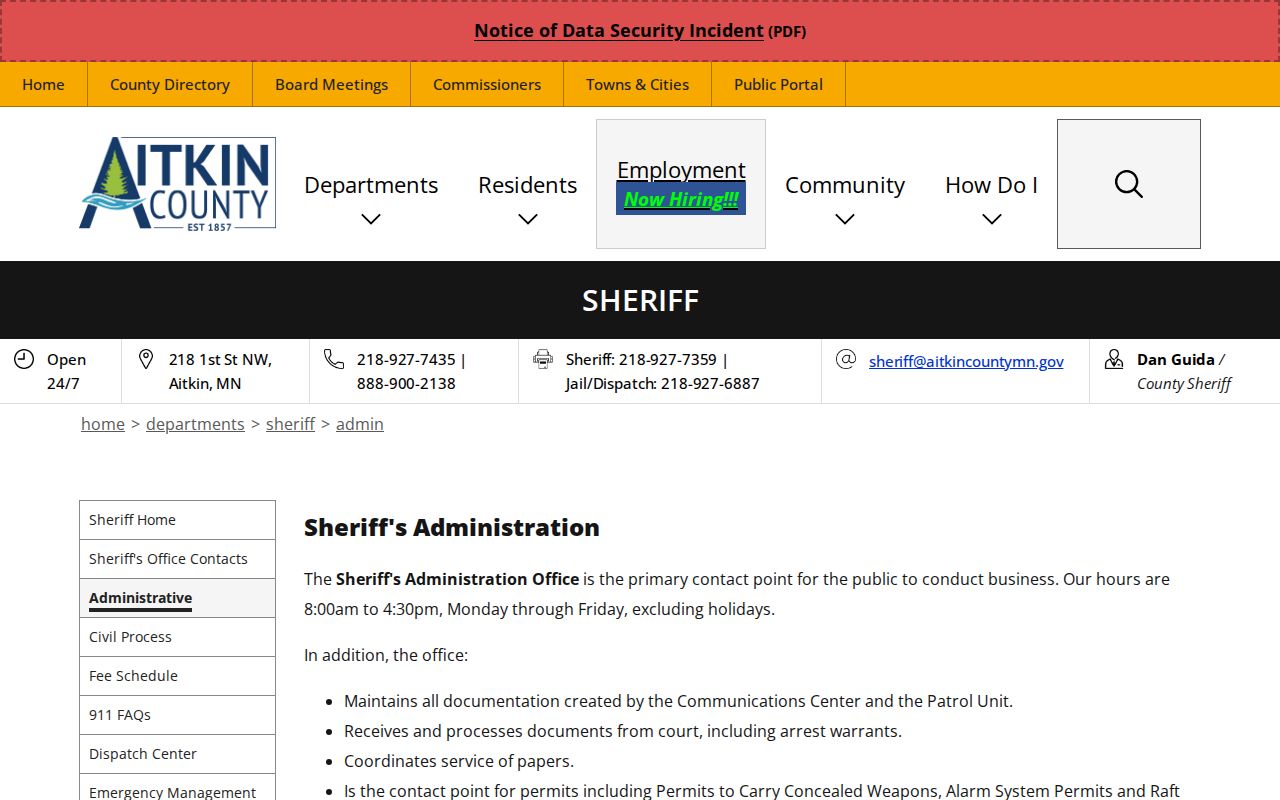
The sheriff's office in Aitkin County receives the court's paper; it does not decide whether the warrant ends.
What an Aitkin County Arrest Warrant Contains
An Aitkin County arrest warrant follows a Minnesota rule that fixes its contents. A case record shows a subset of those fields. A certified copy shows them all.
| Judge's signature | The issuing judicial officer, whose signature makes the warrant valid. |
|---|---|
| Person named | A name or a description that identifies the person with reasonable certainty. |
| Charged offense | The offense described in the complaint. |
| Bail and conditions | An amount for each offense and any release condition the judge sets. |
| Issuing court | Aitkin County District Court, with a direction for prompt appearance. |
| Case number | The court file number, in the CR form for criminal matters. |
An Aitkin Officer May Serve Without Paper
Minnesota law does not make an Aitkin County officer carry the paper at the moment of arrest. The rule asks for something simpler. The officer must tell the person that a warrant exists and what the charge is. Someone stopped in Aitkin County should ask to hear both. Authority rests on the judge's signature. It rests as well on the officer's lawful power to execute the warrant. That is why holding a copy is no defense against an active warrant, and why a certified copy matters only as a record of what the court issued.
How Aitkin County Arrest Warrants Are Served
An authorized officer can act anywhere in Minnesota, since state rule lets the arrest happen across the state. In Aitkin County, the work runs through the sheriff's criminal warrants unit and the patrol deputies. City police assist inside their own jurisdictions. One county communications center dispatches the Aitkin, Hill City, and McGregor police departments. State law also times some arrests. A misdemeanor warrant cannot be served on a Sunday or late at night, except in defined circumstances. An arrested person must be told of the warrant and the charge. Warrantless arrest is a separate power. Minnesota Statutes section 629.34 sets out when a peace officer may arrest without a warrant, the authority that runs alongside warrant service.
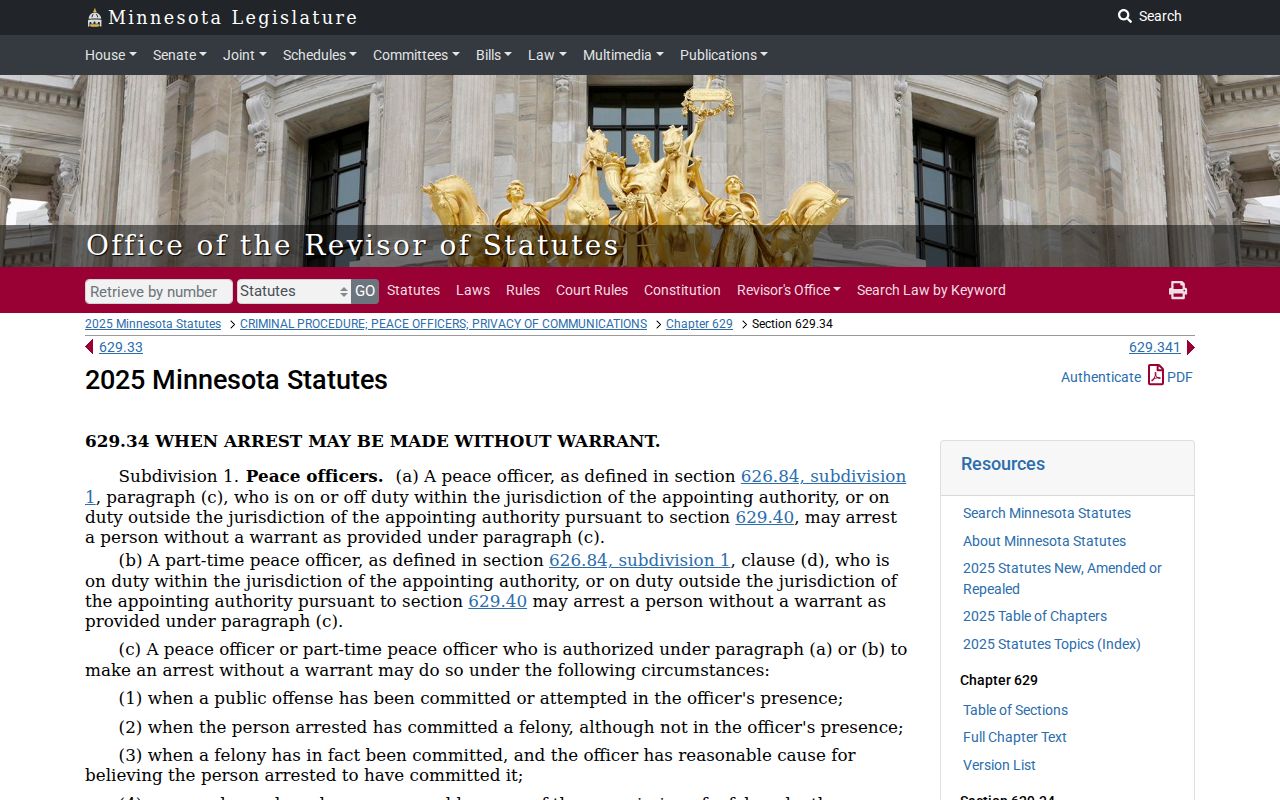
Warrant service and warrantless arrest are different powers, and a reader in Aitkin County should know which one applies.
The Aitkin Arrest Warrant Appearance Rule
An Aitkin County arrest warrant directs that the person be brought before the issuing court without unnecessary delay. If the court is not in session, a rule sets the outer limit. That limit is 36 hours after arrest. The day of the arrest does not count, and a judge must be seen as soon as one is available. This timing protects the first appearance. It promises nothing else. No release is guaranteed, no bond amount is set, and no hearing hour is promised. Case-specific questions belong with a lawyer and the court, not a general schedule.
Arrest Warrant vs Summons vs Bench Warrant
Three documents can pull a person into a criminal case in Aitkin County. Only one carries arrest authority from the start.
| Process | What it does | What happens if ignored |
|---|---|---|
| Summons | Orders the person to appear on a set date | A warrant may follow |
| Arrest warrant | Authorizes custody and prompt appearance | Service can occur anywhere in the state |
| Bench warrant | Answers a missed court obligation | Type determines arrest authority |
A summons is only a notice. It is not an arrest order, while a bench warrant answers a different problem than a new charge in Aitkin County.
Aitkin County, City, and Federal Warrant Lines
Aitkin County handles warrants for crimes charged in the district court. City police serve within their own authority. One county center dispatches all three city departments. Federal warrants sit outside both systems. Aitkin County falls inside the District of Minnesota, where the federal office in Minneapolis can be reached at 612-664-5900, the Duluth office at 218-529-3620, and the North Star Fugitive Task Force at 612-664-5910. A federal matter belongs with a federal court or lawyer, not the county warrant desk.
What to Do If There's a Warrant for You
Confirm the warrant first. Then decide with a lawyer how to appear in Aitkin County court. The county posts no bond schedule. No walk-in surrender form exists either, so an unplanned jail visit can end worse than a scheduled appearance.
Note: Call the court or dispatch first and ask where, when, and how a person should appear on this type of warrant.
Grab a pen and take notes when you call. Write down the case number, the warrant type, any bail amount, and the next court date. Save every confirmation you get. For the full walkthrough, use the Aitkin County warrant records home page.
Aitkin Warrant Bail Comes From the Case
A warrant may list a bail amount, but that figure belongs to one case and one judge. Minnesota's release rules start lean: personal recognizance or an unsecured appearance bond comes first. Money bail, supervision, or restrictions enter only when safety or flight risk calls for them. When the court sets conditions, it puts them in a written order. No flat dollar figure spans Aitkin County, so call the court before you bring money. Paying a fine, a records fee, or a jail booking fee is not posting bond. Ask which bond forms the court accepts and what follows payment.
Aitkin Search Warrants Are Not Arrest Warrants
A search warrant lets officers search and seize property. That is all it does. It cannot authorize an arrest, and it belongs to an investigation rather than a criminal case file a person could open through public access. Search warrants also sit under the tightest limits in the state's access rules. Some are sealed by court order. Others never show up in remote case search at all. So a blank result online tells you nothing about whether a search warrant exists in Aitkin County. And a search warrant is never a way to learn whether someone faces arrest.
Aitkin Sheriff Warrant Records Without a Roster
Sheriff records staff in Aitkin County can field questions about the data they already hold, and the county's public-data form lets you request inspection, copies, or both. The county has no duty to build a fresh list or merge court, sheriff, and city files into one, so describe an existing record rather than ask for a full warrant roster. Call sheriff records at 218-927-7433 or 218-927-7434 during business hours. After hours, the dispatcher's line is 218-927-7400. Neither desk certifies warrants, so take the record back to the court for its meaning. Note that Minnesota Statutes section 629.415 creates a narrow sign-and-release warrant with no arrest authority and no bail.
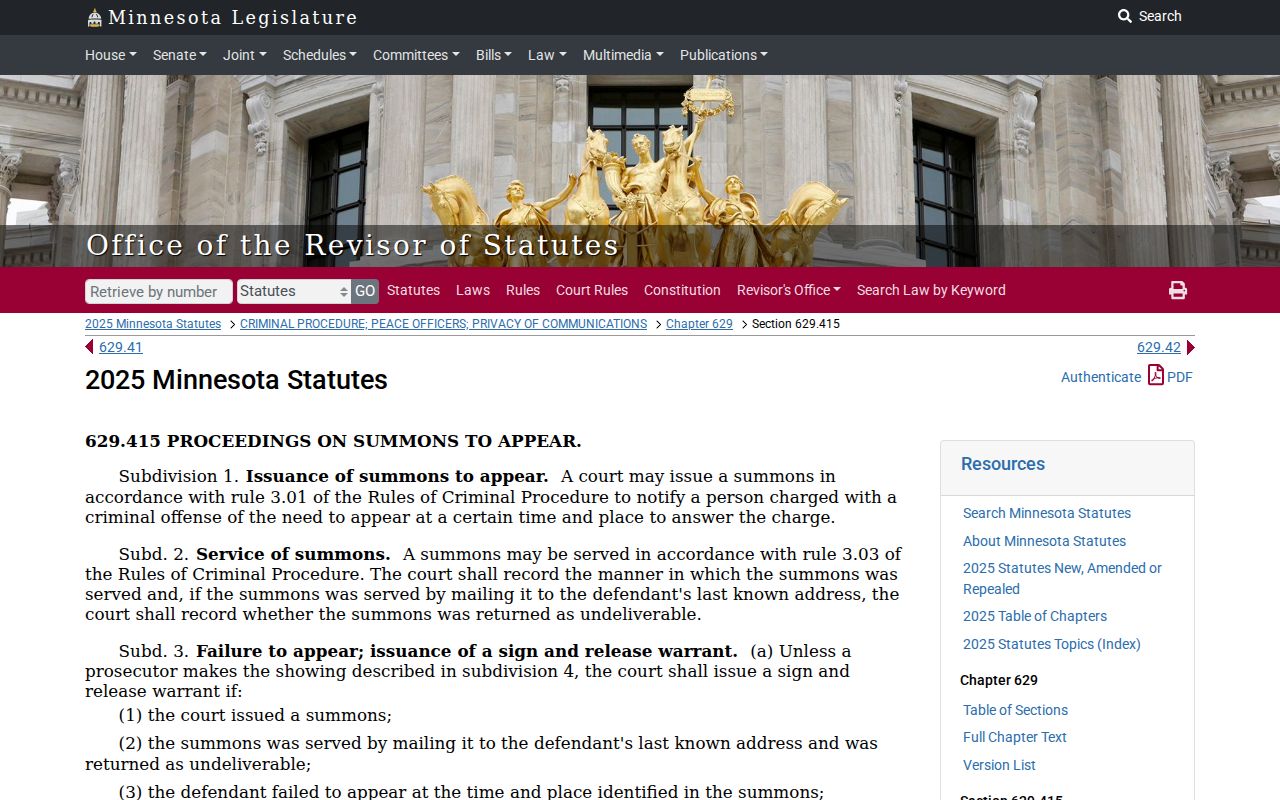
If Aitkin County tells you the warrant is active, ask which type it is. That one detail changes what happens next.