
Bench Warrants in Aitkin County
When a bench warrant in Aitkin County comes out of District Court, the paper is the court's own process against someone who skipped a required step. The triggers vary. A missed criminal or traffic appearance is one. So are an unpaid payable citation, a failure to contact the court as directed, an alleged release-condition violation, and probation or child-support matters. Each type carries its own paperwork. Minnesota keeps no separate bench-warrant database. The warrant record lives inside the case that produced it, and the case type decides which office can change its status.
Note: Ask for the case number first, because the word bench describes a process rather than one standard document.
Aitkin Court Administration and Bench Warrant Status
Court Administration answers case questions for the Aitkin County district court from 209 2nd Street NW, Room 242A. Records, payments, fines, and hearing schedules all run through it. Staff can tell a caller whether a warrant is still active and what the case requires next. Call with the case number ready. Add the full legal name and date of birth. Then ask plainly what the record shows. Staff can read the file and walk through procedure. They cannot give legal advice or predict how a judge will treat an appearance, so plan the next step with that limit in mind.
Aitkin County Court Administration
209 2nd Street NW, Room 242A
Aitkin, MN 56431
218-927-7350
How a Bench Warrant Is Issued
In Aitkin County, a bench warrant follows when a required appearance or response never happens. Rule 6.01 sets the trigger. A citation carries a required warning. Failing to appear or contact the court may produce a warrant. Rule 6.03 lets the court pick a summons or a warrant when someone is accused of violating a release condition, weighing nonresponse, danger, and whether the person's location is known. Once a warrant exists, Rule 3.02 and 3.03 govern its contents and its execution. A judge signs it. It names the person and the offense, and lists any bail or release condition. Any authorized officer may execute it anywhere in Minnesota. The person must be told. That covers the warrant and the charge. The Minnesota Rule of Criminal Procedure 3 page collects those warrant requirements in one place for Aitkin County readers who want the rule text before a call.
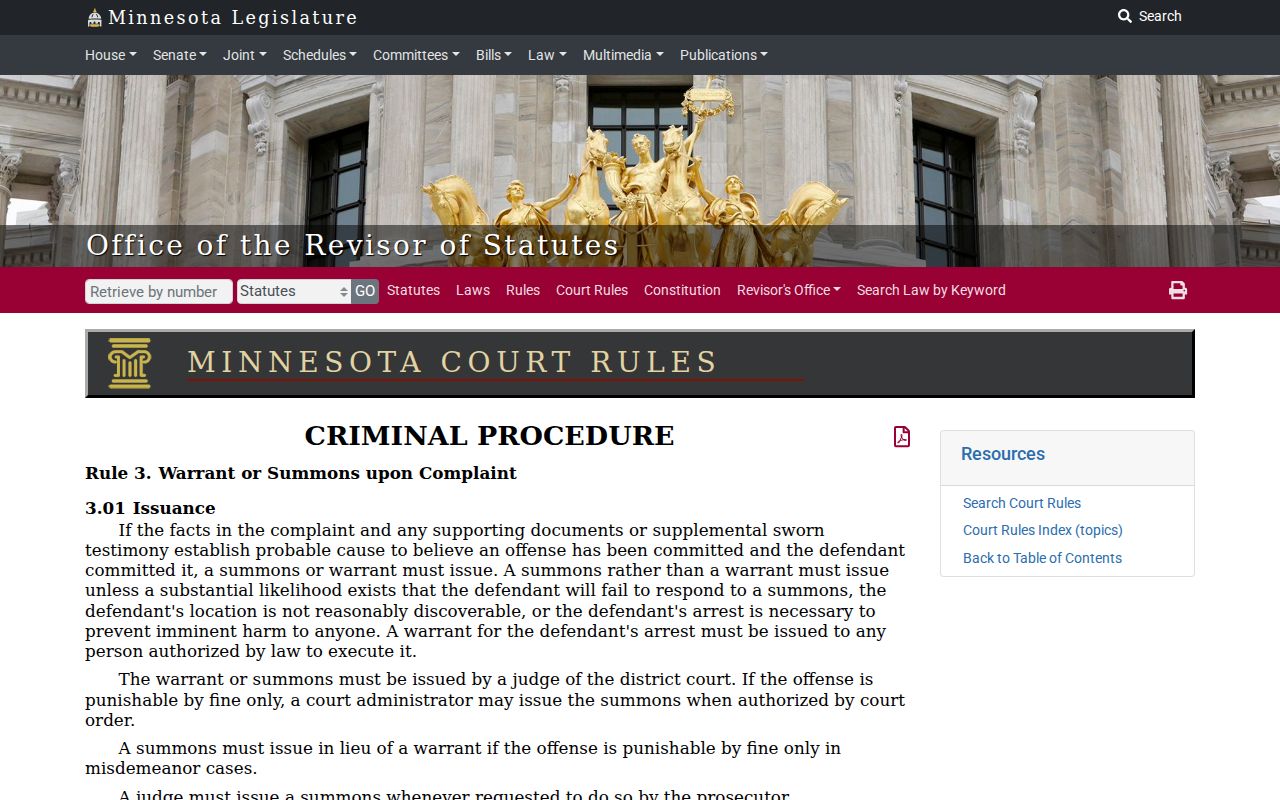
Reading the rule before calling Aitkin County Court Administration gives a caller the right vocabulary for the questions that follow.
Aitkin Dispatch and Bench Warrant Answers
The Aitkin County communications center answers 24 hours a day for warrants and protection orders. It dispatches county deputies and the Aitkin, Hill City, and McGregor police departments. It also runs jail master control. When the court counter closes, dispatch stays the live channel. The county does not publish what a dispatcher will disclose, so ask what the office can confirm and which court or sheriff unit owns the next step. The published line is 218-927-7400.
Bench Warrant vs Arrest Warrant
Bench warrant and arrest warrant describe different origins and different authority in Aitkin County, and that difference changes what a person should do next.
| Point | Bench warrant | Arrest warrant |
|---|---|---|
| What starts it | A missed court obligation | A criminal complaint supported by probable cause |
| Who signs it | A district court judge | A district court judge |
| Arrest authority | Depends on the type; some are sign-and-release | Authorizes taking the person into custody |
| Release terms | Set by the court in the case | Bail and conditions stated on the warrant |
A bench warrant in Aitkin County is not automatically more serious than an arrest warrant. Each one turns on the case behind it.
Why an Aitkin Warrant Flag Falls Short
Minnesota Court Records Online can show a warrant entry or a party-level active-warrant flag. The state warns that the flag may not belong to the case on screen. The marker follows the person, not the file. Read past it. Open the Case Information section and the Register of Actions, and note the case number. Then ask Aitkin County Court Administration to confirm. A reader who stops at the flag may misread the situation entirely. The same care applies when a name search returns nothing, since pending cases stay out of defendant-name results.
Aitkin Sign-and-Release Warrants Are Different
Minnesota built a narrow alternative for a first failure to appear after a mailed summons. Under Minnesota Statutes section 629.415, a qualifying warrant carries no bail. It gives an officer no arrest authority. The officer hands the person notice of a new court date instead. Release happens at the scene. So the first question to the Aitkin County court is not what the warrant costs. It is whether the warrant authorizes arrest at all. One reader assumes every active warrant means custody. That reader may take an unnecessary step. Another treats every warrant as paperwork, and may take a risky one. The Minnesota Rule of Criminal Procedure 6 page covers the citation, failure-to-appear, and release rules that feed this Aitkin County process.
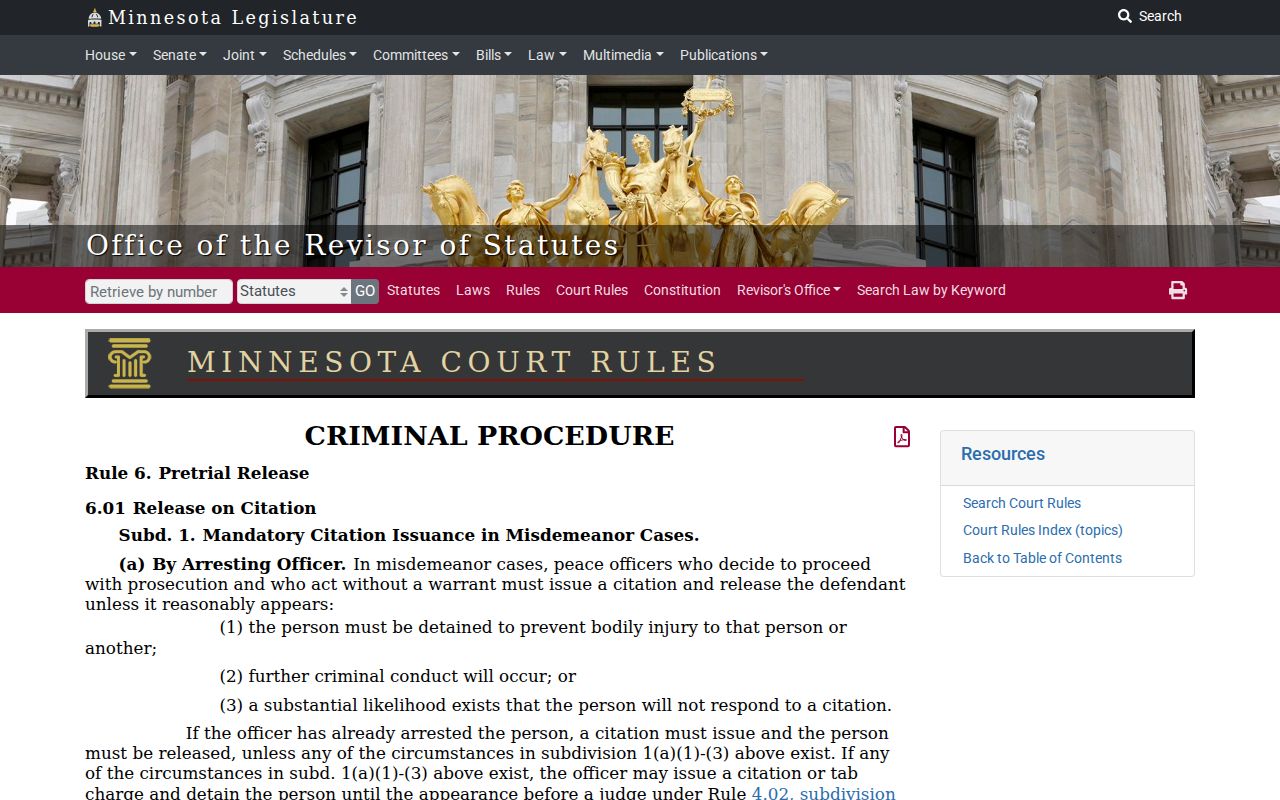
A missed citation response in Aitkin County can bring a warrant. It never has to become a new criminal charge to do so.
How to Resolve an Aitkin County Bench Warrant
Resolution runs through the issuing Aitkin County court, and the county posts no walk-in surrender form or bond schedule. Confirm each step by phone before traveling.
- Find the case number and read the case record, or call Court Administration if the case is not online.
- Ask whether the warrant is active, what type it is, and whether it authorizes arrest.
- Ask what the court accepts as the next step: a new hearing, a motion through counsel, a payment, or a surrender.
- If a lawyer should arrange the appearance, make that call before anything else.
- Confirm the building, the hours, the identification rules, and the security screening before you go.
Note: Paying a fine does not recall every warrant, so confirm the warrant status in writing after any payment.
Which Aitkin County Court Issued It
One court stands behind nearly every bench warrant here. The Aitkin County District Court handles criminal, traffic, juvenile, civil, family, and probate cases filed in Aitkin County, and it belongs to the Ninth Judicial District. There is no separate municipal court keeping its own warrant list. City police can write a citation, and the county attorney prosecutes ordinance, traffic, and parking matters. Still, the case record lives with the district court. Unsure which court handled a matter? Start with Court Administration and ask them directly.
Child-Support Warrants Take Another Aitkin Path
Support cases move down a different road in Aitkin County. A county child-support packet says the sheriff serves bench warrants and arrest or commitment orders in IV-D matters with due diligence. Withdrawn IV-D warrants go back to the county. That is a civil enforcement track, not the criminal one. Before calling a traffic payment line, ask the child-support office or the court which category the case sits in. The wrong desk costs a full day. And no public roster exists that would sort it out for you.
Before an Aitkin Warrant Counter Visit
Three errands, one courthouse. A court date notice, a payment plan, and a bond question each take a different window, so sort out which one you need before you go. The courthouse at 209 2nd Street NW keeps weekday hours only, 8:00 a.m. to 4:30 p.m. Build in time for the security checkpoint. Bring photo identification. Once there, ask whether a judge will see the person that day, whether the case really needs a lawyer, and what document proves the warrant was recalled. Keep that proof with any receipt or hearing notice. The clearing options are gathered on the county warrant records home page.
Why the Aitkin Calendar Is Not Warrants
The Aitkin County court calendar is a schedule, not a warrant list. The county posts it each business morning and updates it through the day. Even so, the Judicial Branch warns that it does not include every matter. A missing case does not mean the hearing was cancelled. A listed hearing says nothing about a warrant's status either. For that answer, go to the case record and a confirming call to the court or the sheriff.